
By Robert Romero Jr.
Published
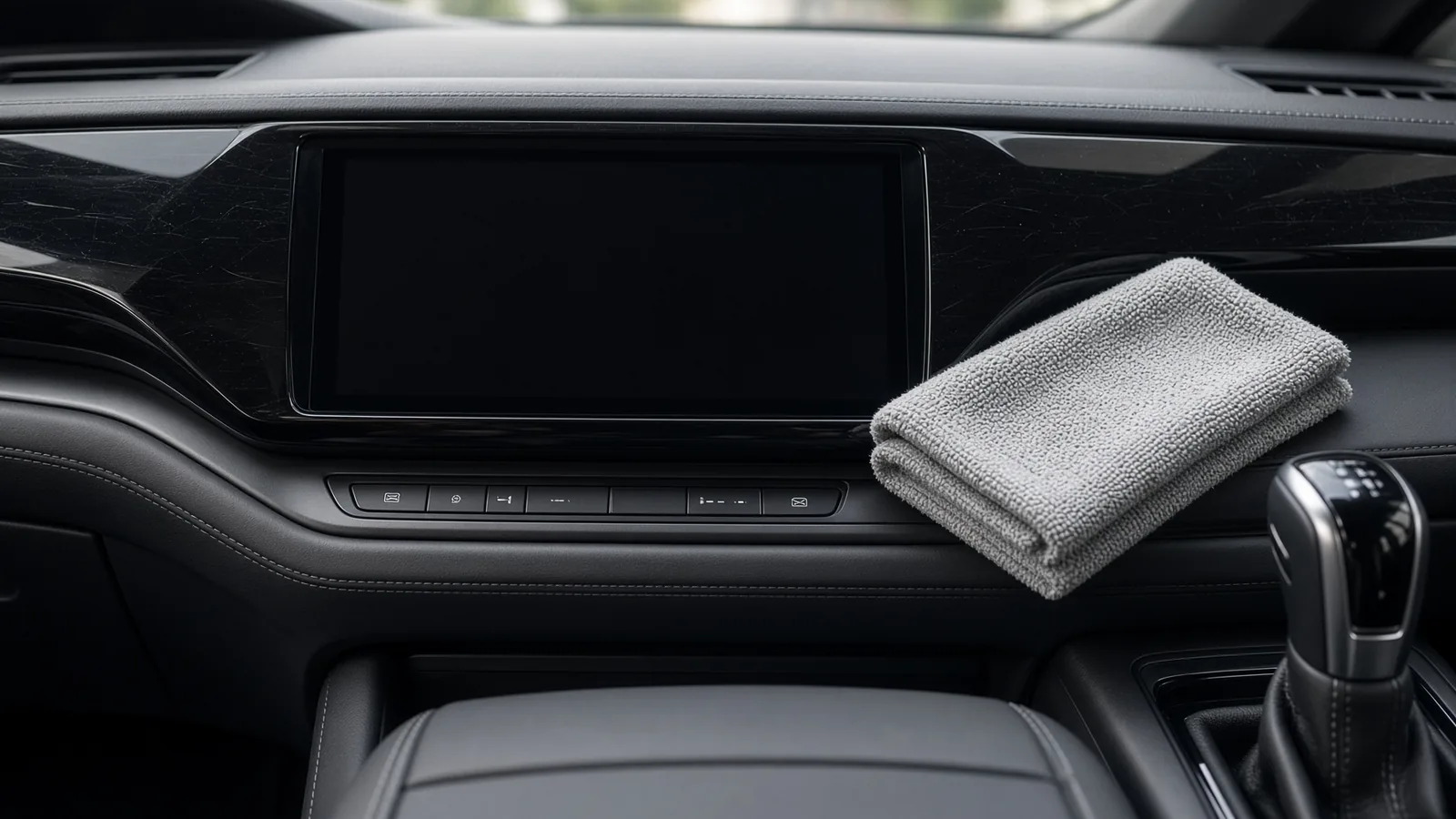
AI-generated illustration of glossy trim and a blank screen with a dry cloth nearby. Not a customer cabin and not a finished interior detail.
The short answer
Southern Auto Detailers does interior work at the studio in 78233. This article does not assume every interior visit includes extraction, steam, or odor treatment. Those show up on the studio’s interior page as tools for some cabins. They are not the subject here, and they are not something this article promises.
Why glossy trim shows every pass
Piano-black and other high-gloss plastics mark the way dark paint marks. Dust on the cloth becomes a fine trail. A ring or a dry paper towel is enough. Once the trails are in the gloss, a cleaner does not fill them. At most it removes dirt that is making them look worse.
The illustration shows a blank screen, hairline marks in the glossy surround, and a dry folded microfiber sitting on the console. There is no brand on the screen and no claim that the marks were removed. Hairline marks in a generated photo are a stand-in for the pattern owners notice in sunlight. They are not a documented repair.
If the marks already bother you, say so when you book interior detailing at the studio. Some light haze is dirt. Some of it is abrasion in the gloss. Dirt can be cleaned. Abrasion may remain visible. The studio should tell you which it is looking at rather than imply that every shiny panel can be made new.
Cleaning versus existing dashboard damage is a different problem: faded, sometimes sticky vinyl from heat, not a hairline in piano black. Do not use that article’s material advice on a screen.
Spray the towel, not the switch
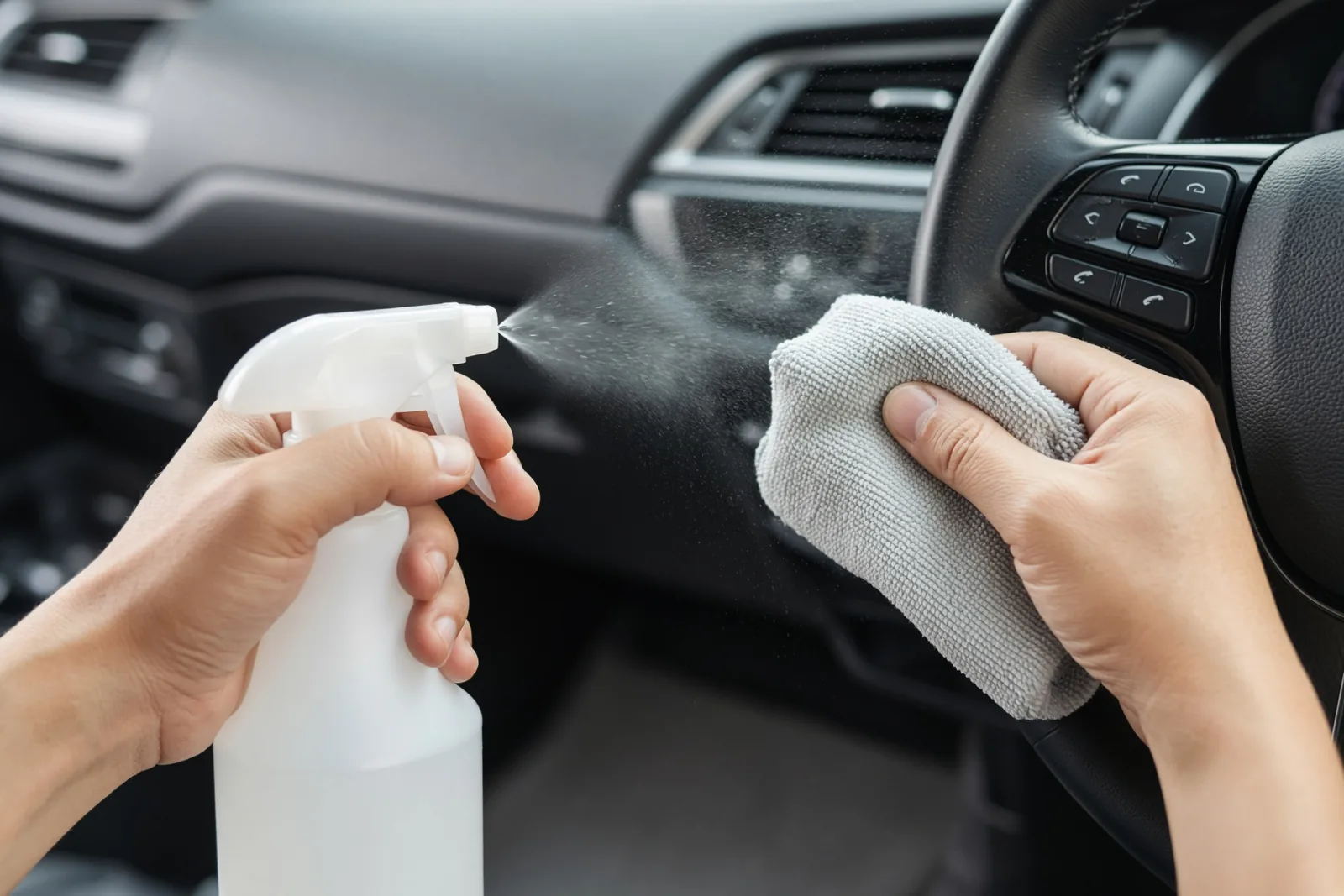
The same interior guide says to spray cleaner on a microfiber, not on the surface. Liquid runs into gaps you cannot dry, and mist lands on panels you already finished. Around a screen or steering-wheel buttons, that gap is where electronics live.
The photo shows the useful version of that idea: the spray is aimed at a towel, held off the wheel controls. You can also see stray mist in the air. That mist is why “aim at the towel” still wants a light pass, not a soaked cloth dripping onto the column. The bottle in the picture has no label because no product is being recommended.
A few habits follow from that, without turning this into a chemical recipe.
Work from the top of the dash downward, which is also the order the wiki suggests for an interior, so dust you loosen does not fall onto a panel you just finished.
- Use a clean microfiber, not the same towel that just wiped the door sill.
- Wipe the screen with light pressure. Grit plus pressure is what writes the trails.
- Keep the cloth damp, not dripping, if you use a cleaner at all.
- Do not spray into vents, chargers, or the seam around the screen.
- Skip paper towels on piano black. They are abrasive enough to haze gloss.
Solvents and household shortcuts
“It cuts grease” is not a reason to use a strong solvent. The wiki warning is the one to keep: discoloration, surface damage, and white marks can be permanent. Acetone does not belong on a screen or a button. A kitchen glass cleaner is another common shortcut. This article does not claim every screen fails if it sees ammonia. It does say not to experiment on a bonded display with a house-window product.
Abrasive sponges, including melamine sponges, can dull gloss. This article does not recommend them on trim or screens. If a spot will not leave with a damp microfiber, pause instead of scrubbing harder. The interior guide also warns that too much water around dashboard electronics is its own problem. Steam is not a default suggestion for a screen housing.
Dressing, glare, and the top of the dash
Dressing can make dusty plastic look even for a day and then collect dust. On the top of the dash it can also throw sunlight back at the driver. DetailingWiki says to be careful with dashboard dressing because a shiny surface can reflect sunlight and affect vision while driving. A low, dry look on the upper dash is the safer default. A richer look on door panels is a separate request. Do not ask for the same wet shine on the pad you look over while you drive.
Lacquered wood-look trim is often thin. The wiki notes that interior wood lacquer can be very thin if someone thinks of polishing swirls out of it. This studio is not offering interior polish-to-correct as a published service. Ask during the appointment and expect a careful clean, not a refinish.
What to point out before an interior appointment
The studio’s interior service covers the cabin materials that are actually there. Screens and piano black are easy to forget until a photo. A note that helps:
How to prepare for a detail is about the day of the visit, including personal items. This article is about the surfaces. What to tell the studio before you book is the intake note for the whole car.
The studio’s hours, as published on the site, are Tuesday through Sunday, 7:00 AM to 11:00 PM, Monday closed. The deposit that holds a slot is 20% of the quoted total and is non-refundable, which is also already published. Neither number is a price for interior work.
- Say if the screen has a protector, a crack, or a lift at the corner.
- Say if the glossy trim already has hairline marks you can live with, or marks you want looked at honestly.
- Say whether child seats, toll tags, or phone mounts should stay in place.
- Say if a previous cleaner left a white haze or a sticky film.
- If the paint needs the same visit, that is a full detail, not a longer interior. Correction and coating are still separate.
Book the cabin, and mention the gloss
If the screen and the shiny trim are the parts you notice, say that when you request an interior-detailing quote. Call (210) 201-4847. If the outside is just as tired, ask about a full interior-and-exterior detailing visit instead of hoping one appointment title covers both. The car comes to 11692 Bricken Circle. Live Oak and the other nearby communities on the site are places customers drive from, not extra studios.
Sources
- DetailingWiki, “How to clean interior.” https://www.detailingwiki.org/guides/how-to-clean-interior/. Fetched for this article. No date on the page. A search index listed 2017-05-31. Quoted and paraphrased for the solvent warning, spraying the towel rather than the surface, top-to-bottom order, dashboard-dressing glare, and the note that lacquered interior wood is thin.
- The studio interior page in the site source states steam and extraction for some cabins. This article does not expand that claim and does not treat it as part of screen care. See the batch README for the discrepancy note.
- No screen manufacturer guide was cited, because no specific vehicle display was supplied.