By Robert Romero Jr.
Published
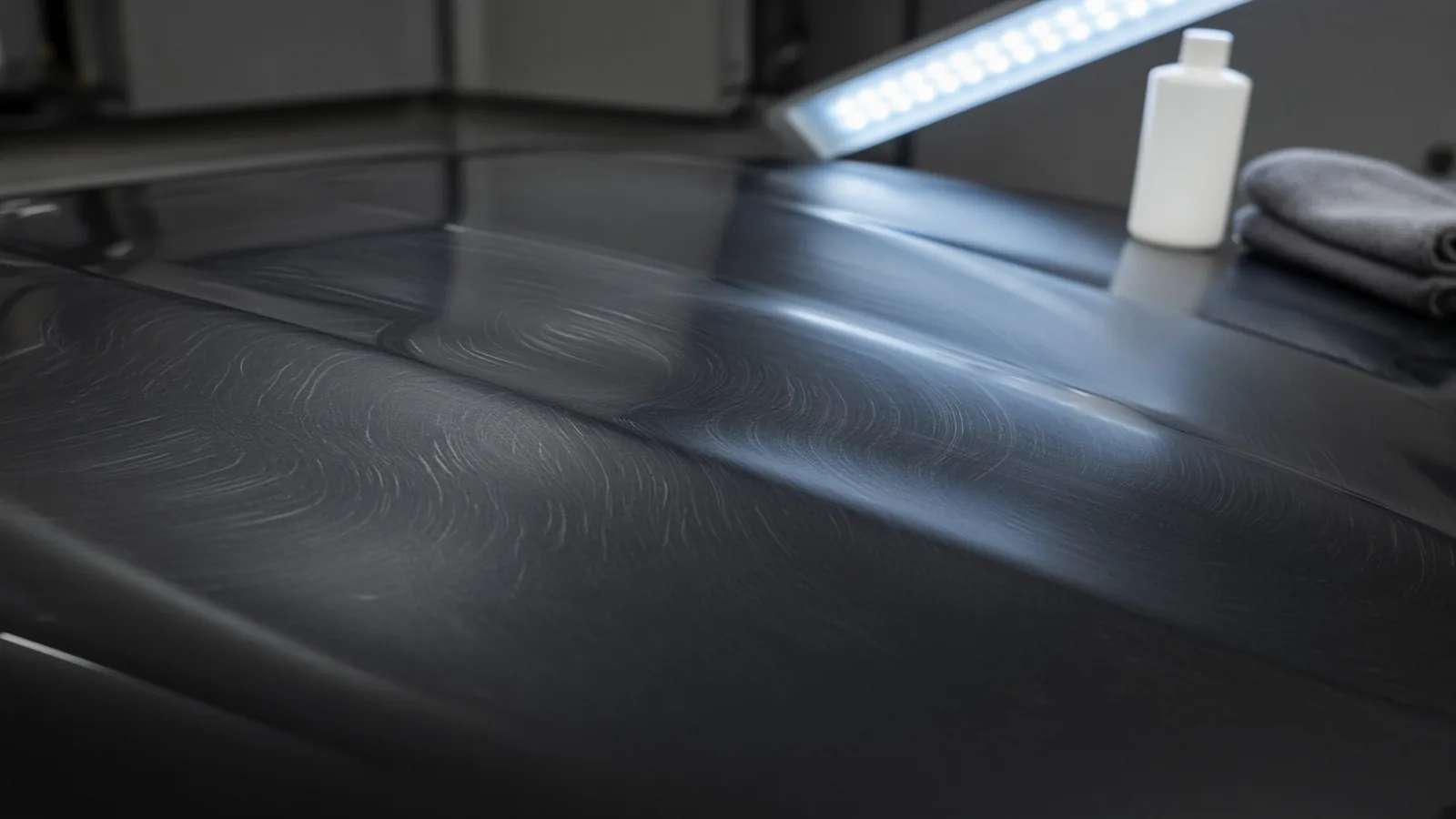
AI-generated illustration of swirls remaining visible under a light. Not a customer vehicle and not a completed Southern Auto Detailers coating.
The short answer
Southern Auto Detailers installs coatings only at the studio, 11692 Bricken Circle, San Antonio, TX 78233. This article does not name a brand, a year-count, or a price.
What the bottle is often expected to do
Gloss and defect removal are different jobs. A clean panel can look brighter because dirt is gone. A temporary filler, such as some glaze-type products, can sit in tiny valleys and make marks harder to see until that filler washes away. DetailingWiki’s polish article, which also shows no date, draws the line the other way for an actual polish: “Polish does NOT hide surface defects, but removes it.” A coating is closer to a lasting film than to a filler. It is not the step that levels the clear coat.
The studio’s ceramic coating page says the same thing in shop language: the install happens after the paint is clean and, when needed, corrected, and the coating does not make neglected paint look corrected. This article is the longer version of that one point.
What the film follows
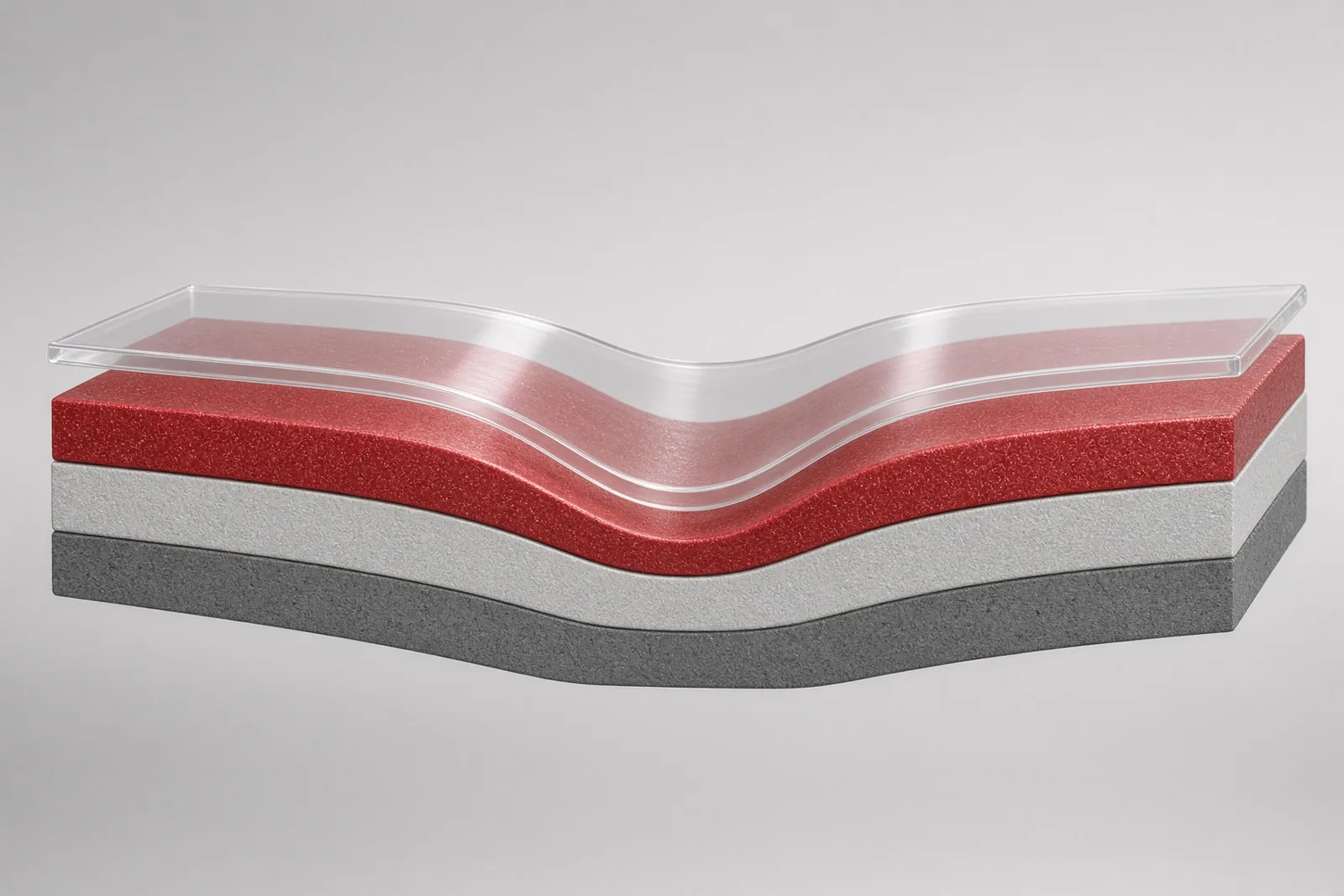
Picture a shallow groove in the clear coat. A film that bonds to that surface drapes into the groove. It does not pour in and cure as a flat tabletop over a valley. From a few feet away, in soft light, you may not notice. Under a bright overhead light, or the sun at a low angle, the groove still scatters light. That is why a coated car can bead water and still show swirls.
The diagram below exaggerates the idea. The clear sheet dips with the low spot instead of bridging it flat. The wave is larger than a real coating thickness, and a slight separation in the drawing is an illustration limit, not a failure mode the shop is diagnosing.
Why “it looked fixed” sometimes fades
A panel can look quieter right after a product is wiped on for three ordinary reasons.
None of those is the coating leveling the clear coat. When the filler wears off, the same marks show again, now under a film that is annoying to remove if someone later wants them corrected. DetailingWiki notes that a coating mistake is “very labor-intensive to correct” and that experience is needed to apply these products. That is a general caution from an undated wiki page. It is one reason the work stays in a controlled studio instead of on a windy driveway. It is not a claim that every mark can later be undone.
- The panel is clean, so contrast from dirt is gone.
- Oils or a glaze are sitting in the marks.
- You are looking in kinder light than the inspection light you used in the driveway.
Correction and coating are separate decisions
Paint correction is the process that improves clarity by refining the clear coat. What paint correction involves is the plain-language version. Correction before a coating covers the order of work. Skipping correction does not hide the same scratches under the film.
You can coat paint that has not been corrected if you accept the marks remaining. That choice should be explicit. The paint correction page is the refining step. Do not ask the coating page to do both jobs under one vague word like “protection.”
A useful comparison before you book:
The last row matters. A full detail on this site is interior work plus an exterior detail. Correction and coating are quoted on their own when you want them.
| Question | Coating answers it? | Correction answers it? |
|---|---|---|
| Will water behave differently on a clean, coated panel? | That is the protection conversation. | No. |
| Will these circular marks get quieter? | No. The film follows them. | Sometimes, if they are still in the clear coat. Not guaranteed. |
| Will a rock chip disappear? | No. | No. Missing paint is not polished back into existence. |
| Is this included because I asked for a full detail? | No. | No. |
How to look at the paint before you call
You do not need a shop light to gather a useful note. This is a viewing checklist, not a diagnosis.
The photo below is an illustration of swirls under an inspection light, with an unlabeled bottle nearby. The marks are still there. It is not a before-and-after, and it is not a car the studio has coated.
- Park with the panel between you and a bright light, or look along the door in late-day sun.
- Check the hood, behind the door handles, and the rear quarter.
- Take one photo in that light. A straight-on photo often hides the marks.
- Write down whether you want the marks addressed or the paint protected as it sits.
- If a line catches your fingernail, read when a scratch is too deep to polish before you assume correction will erase it.
What to ask for at the studio
If the swirls are the reason you are calling, say that. “Ceramic coating” by itself tells the studio you are asking about a protective film. “I can see circular marks on the hood and I do not want them sealed in” tells us to talk about correction first. Both can be part of one visit. They are not the same line on the quote.
The studio publishes hours on the site: Tuesday through Sunday, 7:00 AM to 11:00 PM, Monday closed. A 20% non-refundable deposit of the quoted total holds a slot. Those are published terms, not a coating price.
If you are in Converse, Schertz, or elsewhere in northeast San Antonio, the drive ends at the same studio in 78233. Those communities are not extra shops. The 78233 service-area page is the location note for the address itself.
Call (210) 201-4847 or use the contact form and describe the marks in a sentence. If you only want washing and interior work, say that too, so the appointment is not booked as a coating consult.
Book the conversation before the film
If you want the paint protected and you also care how it looks in direct light, start with the ceramic coating service and mention the swirls. If the marks are the whole point, start with paint correction. Either way, the appointment is at the studio. Call (210) 201-4847 or send the details through the contact page.
Sources
- DetailingWiki, “What is a coating.” https://www.detailingwiki.org/detailing-miscellaneous/what-is-a-coating/ (the same article is also reached from /protection/what-is-a-coating/). No date was displayed on the page fetched for this article. Quoted for the statement that these coatings do not fill swirls or hide defects, and for the general caution that application mistakes are labor-intensive to correct.
- DetailingWiki, “What is a polish.” https://www.detailingwiki.org/correction/what-is-a-polish/. No date displayed. Quoted for the distinction that polish removes defects rather than hiding them.
- Southern Auto Detailers ceramic coating page, fetched live on 9 October 2026. https://southernautodetailers.com/ceramic-coating. Used to align this article with the published service description. Hours and the deposit are taken from the site source that matches that live page, not invented here.