
By Robert Romero Jr.
Published
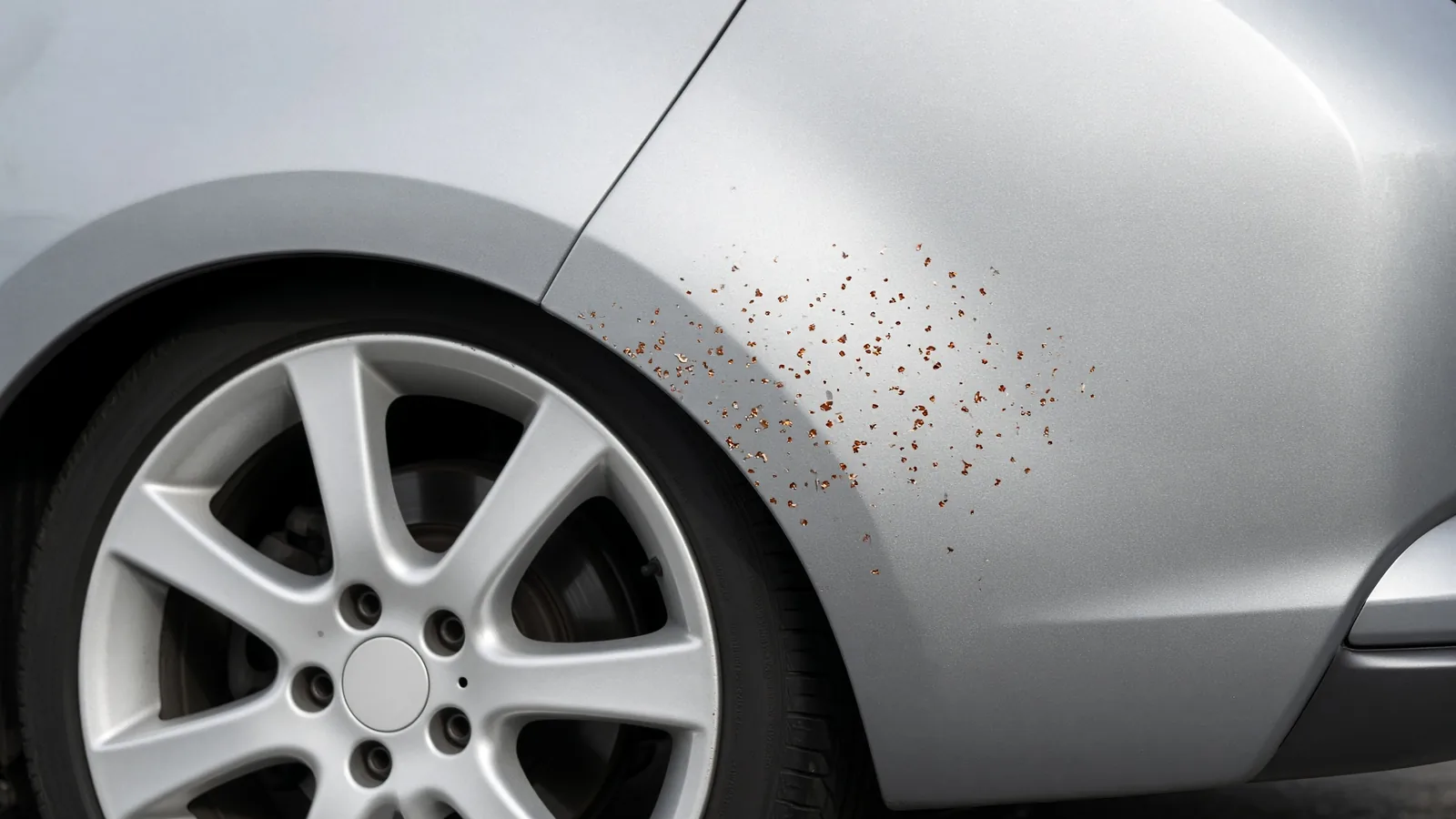
AI-generated illustration of orange-brown specks on paint near a wheel. Not a customer car and not a completed decontamination.
The short answer
This is an exterior-detailing question. It is not a ceramic-coating question and not a paint-correction question until the specks, and any marks they left, have been looked at. Southern Auto Detailers does that look at the studio. There is no driveway service.
The page fetched for the wiki article did not show a publication date. A search index listed 17 March 2016. The technical description below follows what that article actually says. One maintenance percentage in the same article is left out on purpose, because it reads like a guarantee and it does not belong in a local service page.
What “fallout” means on a car
The wiki uses “fallout” for particles that settle out of the air onto the vehicle. Iron is the group that turns the conversation orange. Fresh brake dust can look like dark soot on a wheel. After it oxidizes it reads as tiny rust-colored dots. They are small enough that a quick glance calls them “road dust.” A closer look shows discrete specks, often denser in the spray path behind a wheel, not a uniform film of gray traffic dirt.
Traffic film is a broader layer: dust, rubber, soot, and other road grime that dulls a panel. Iron specks can sit in that film, but a speck you can pick out one by one is the subject here. If the whole car looks hazy, say that when you book. Water spots are a separate pattern. Do not scrub either as if they were loose dust.
Why a speck grips the clear coat
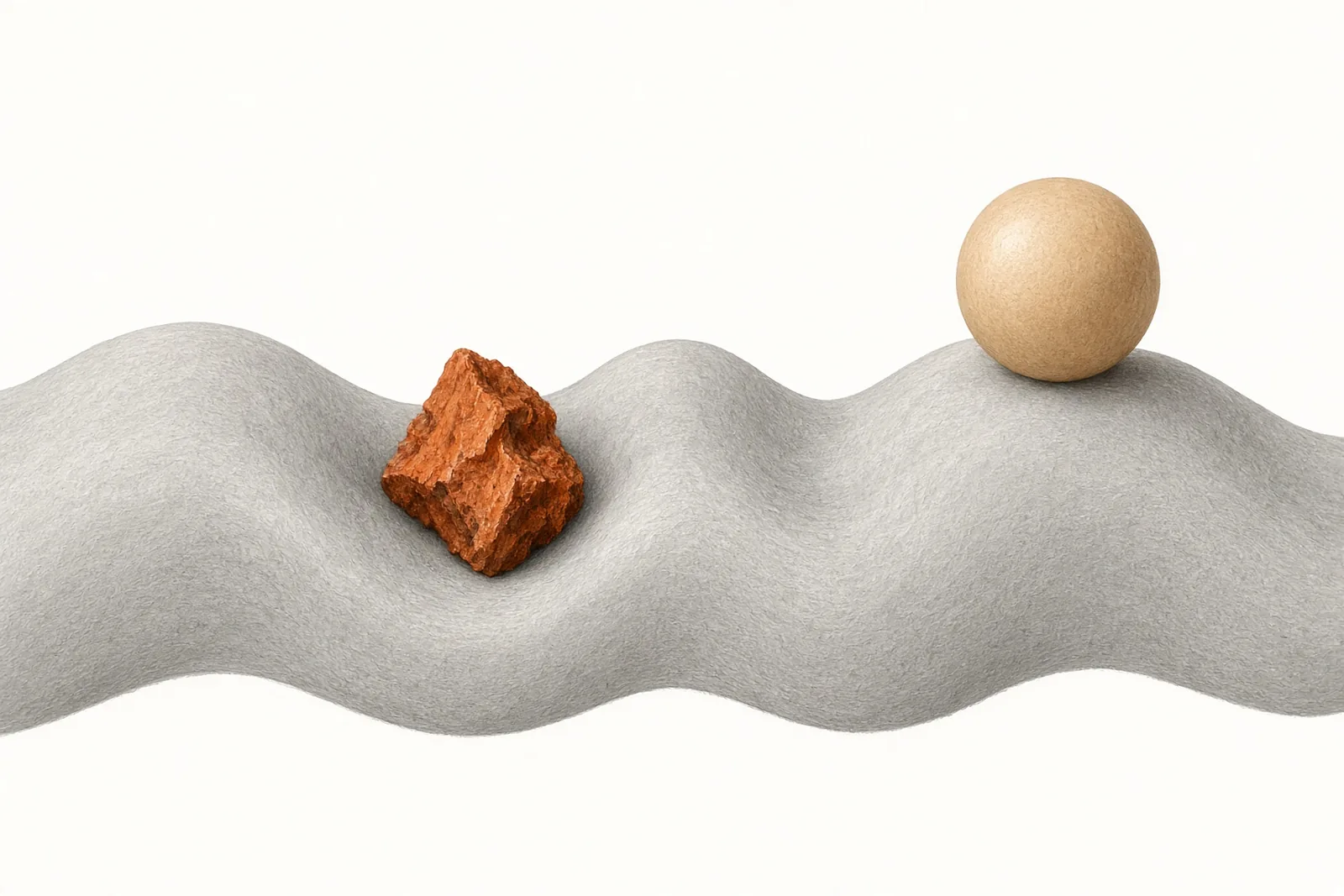
DetailingWiki describes iron particles as jagged, unlike a smoother grain of sand, and says oxidation makes the outside even rougher. Paint is not glass-flat at a microscopic scale. Those jagged bits sit in the tiny texture, and as the iron oxidizes the particle can expand and hold tighter. That is the wiki’s account, not a lab report on San Antonio roads. It is enough to explain a daily experience: the speck survives a rinse that would have carried ordinary mud away.
The drawing below is a simplified model of that idea. A jagged rust-colored particle sits in a low spot. A smooth round grain sits on a high spot. Nothing here is to scale, and the particle is shown resting in the valley rather than buried. Use it as a picture of “jagged holds, smooth sits,” not as a microscope photo.
The panel behind the wheel is not the wheel
Wheels collect brake dust first. The paint beside the wheel collects the spray. Wheel detailing is about the wheel. Iron on the quarter is still paint, and it does not get a wheel-face brush. If you only ask for wheels, the fender specks may still be there. If you ask for an exterior detail, mention the orange dots so decontamination is part of the conversation.
The photo is an illustration of that pattern: small orange-brown specks on a silver quarter, above an unbranded wheel. Specks in a generated photo tend to look larger than real fallout. Do not treat the picture as proof of how dense your car is, or as a before-and-after.
Why scrubbing is the wrong first move
A particle sharper than the dirt around it will scratch if you drag it. DetailingWiki’s page on preparing paint before polishing makes the same point: iron left on the panel can cut while you work, because you do not control how long that jagged bit keeps cutting. A dry microfiber or a household sponge wiped across a speckled quarter can write those particles into swirls. You do not need to be polishing to have the problem.
The wiki describes two modern approaches once iron has bonded: a chemical fallout remover that loosens particles so they can be rinsed, and claying. It presents the chemical route as easier on the paint than clay, and notes that clay needs more rubbing and can add marring. It also recalls older wet sanding or heavy polishing. This article does not teach those methods, name a brand, or recommend wet sanding. Chemical choice and dwell time depend on the product and the surface. That is a shop decision, not a recipe.
What a clay bar does explains mechanical decontamination in general. Clay is a tool for bonded contamination after a wash, not a substitute for looking at the paint, and not something to rub over a panel that is still covered in loose grit.
A practical checklist before you decide to “just wipe it”:
- Rinse loose dirt first. Do not wipe a dry, speckled panel.
- Look at the lower quarters and the paint behind each wheel. Note whether the dots are orange, black, or glassy.
- If they feel raised, stop rubbing.
- Photograph one panel in daylight, close enough that the specks show.
- Tell the studio whether they showed up after a trip or have been there for months. Time changes how stubborn they are. It does not change the advice not to scrub.
What an exterior detail is being asked to do
An exterior detail is the right place to talk about bonded contamination, wheels, and a careful wash. It is not automatically a polish, and it is not a coating. If scrubbing already left circular marks, that is a separate paint correction question, with the limits in when a scratch is too deep to polish. A coating over embedded iron does not make the specks harmless. The ceramic coating page is for that later decision.
Customers in Converse use the same studio. The Converse page is a service area, not a second shop.
Point out the specks when you book
An exterior detail is the appointment to ask for when the lower panels feel rough or look peppered. Call (210) 201-4847 or send a photo through the contact page. Mention the wheels if they are dusty too, and say if you also want the cabin done. Leave correction and coating for an explicit yes. The work happens at 11692 Bricken Circle.
Sources
- DetailingWiki, “What is a fallout remover?” https://www.detailingwiki.org/decontaminating/what-is-a-fallout-remover/. Fetched for this article. No date was printed on the page. A search index listed 2016-03-17. Used for the definition of iron fallout, brake dust as a common source, the jagged-particle explanation, and the comparison of chemical removal, claying, and older heavy polishing. The article’s “98%” wash-off sentence is not repeated, because it would read as a guarantee this shop is not making.
- DetailingWiki, “How to prepare paintwork before polishing.” https://www.detailingwiki.org/guides/prepare-paintwork-polishing/. Indexed excerpt used for the point that leftover iron can scratch while you work the paint. A search index listed 2016-05-16.
- Southern Auto Detailers exterior and ceramic service copy, from the site source that matches the live ceramic page checked on 9 October 2026. No new environmental claim about local air quality or rail lines is made here.